The brief began with Candy Crush players who had finished every available level. They were waiting for weekly releases, while milestone celebrations could be 1,000 levels apart. I explored how the game could recognise their effort more often.
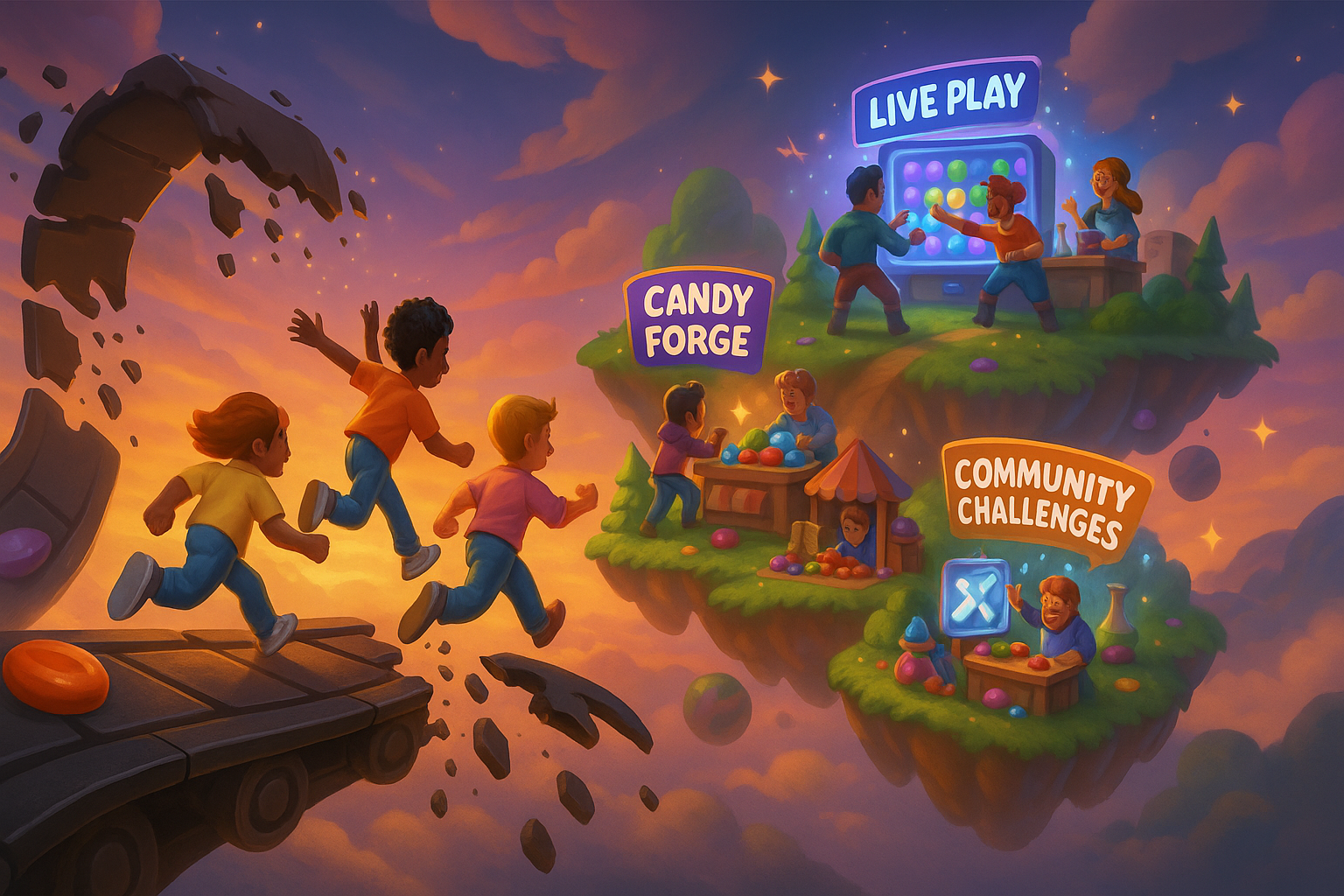
As UX lead, I proposed recognising weekly activity before players reached the end of the map. With the team, I designed badges players could earn for levels completed, keep and display on their profiles.
Launched in 2024, the experience increased retention and rounds played, with recognition extended to a much wider group of dedicated players.
The end of the map
Candy Crush adds levels every week. Its most active players regularly complete them all and reach what King calls end of content, or EOC.
Between releases, these players returned to the same activities. The question was how to make their continued effort feel worthwhile.
| Year | Levels in the main map |
|---|---|
| 2012 | 65 |
| 2013 | 500 |
| 2016 | 1,000 |
| 2020 | 4,000 |
| 2023 | 15,000 |
| 2025 | 18,000 |

A player enjoys the game on her commute.
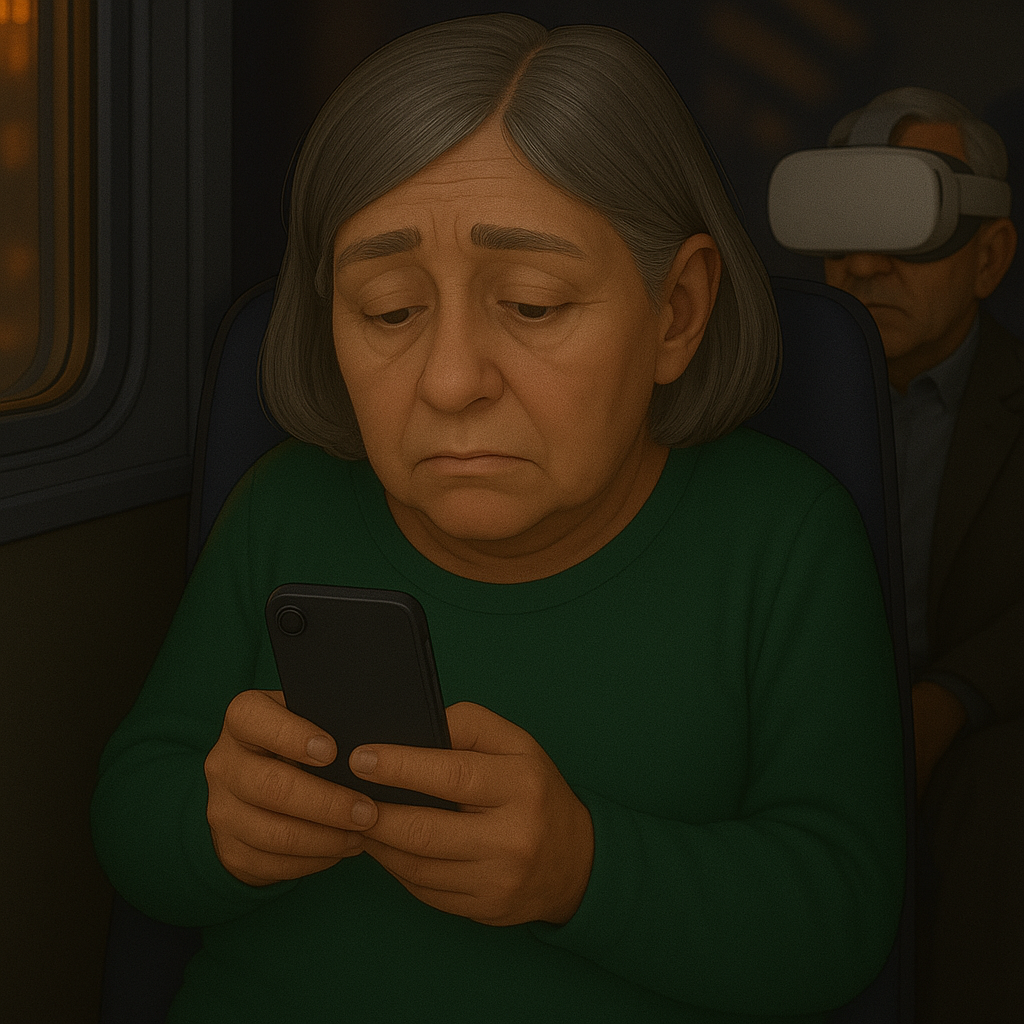
Years later, she is still playing, and the game has stopped feeling rewarding.
Is the grind worth it?
Finishing thousands of levels takes sustained effort, but the game offered little lasting recognition.
The challenge
Players at the end of the map were a small group, about 8,000 people, who brought in about 2% of the game's revenue. Their retention had declined since late 2022, making the problem important to both the players and the business.
They had also invested years in the game. The design needed to recognise that commitment.
By 2023, the game had more than 15,000 levels. Both paying and non-paying players were leaving, while long gaps between milestones gave them few opportunities to see their commitment acknowledged.
- churn at the end of the map, year on year
- +12%
- spending from these players
- −8%
Player research
Player feedback pointed to a recognition problem as well as a content problem: years of effort could end with the same brief celebration.
- 01Recognition was briefA banner marked the milestone and left little that players could keep or show. “I reached level 15,000 and got the same boring banner as before.”
- 02The next goal was unclearPlayers could reach the final level without knowing what would follow. “I had no idea I was even close to finishing. One day I just... ran out of levels. Now what?”
- 03Long-time players were ready to leave“I've played for five years, but I'm not going to stick around if there's nothing meaningful left to do.”
- 04Progress went unrecognised for too longPlayers made progress every week, while celebrations were far apart.
“I have to wait 1,000 levels just to get any kind of acknowledgment. That's like 6 months of playing!”
The loop at the end of the map
Players repeatedly moved between new releases and the same end-of-map activity.
- 01Running out of levelsPlayers who reach the final level have completed every level in the game. Now they wait each week for new ones.
- 02Star TournamentFinishing every level unlocks the Star Tournament, a weekly event where players replay past levels to earn stars, compete for top ranks and win rewards.
- 03The same cycleOnce players finish the new levels, they return to the Star Tournament until the next release.
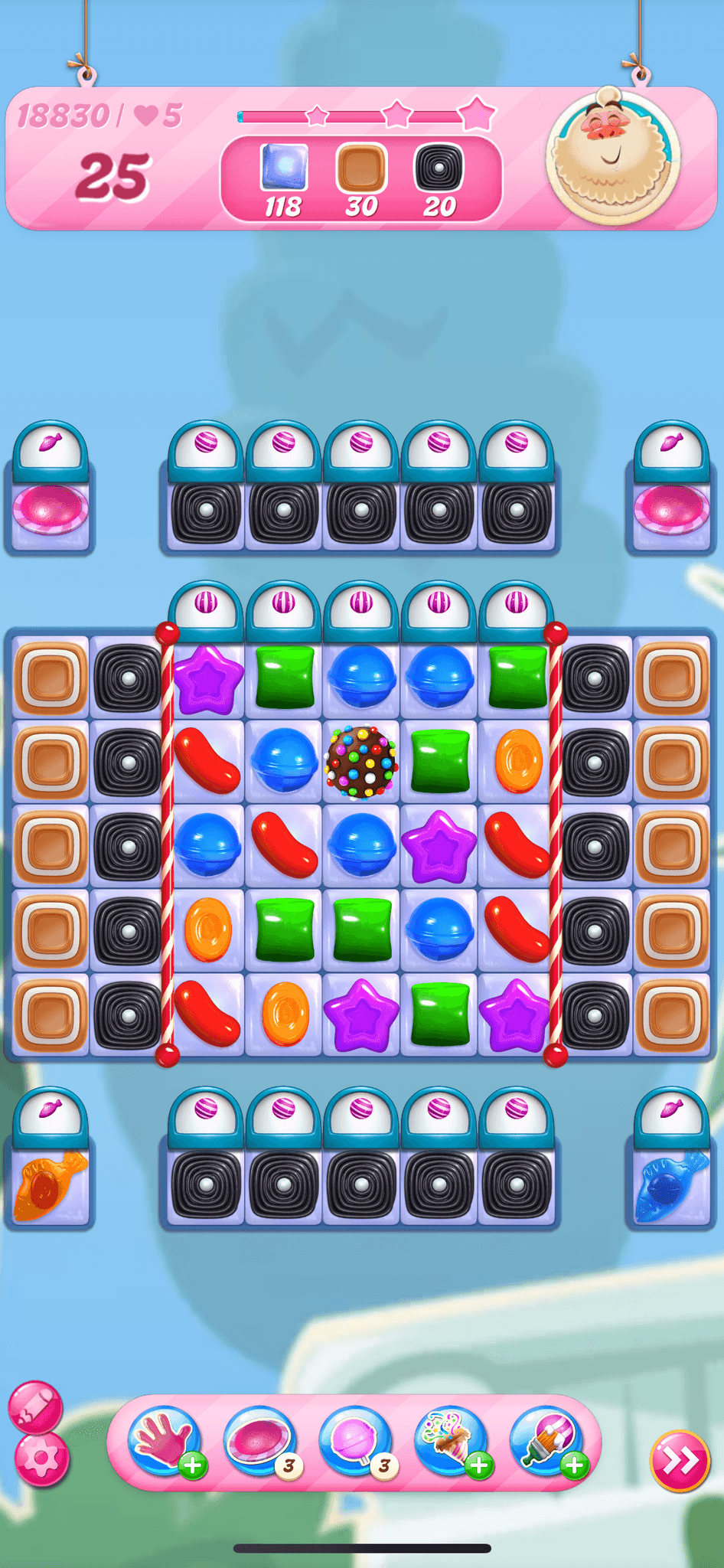
A level near the current end of the map.
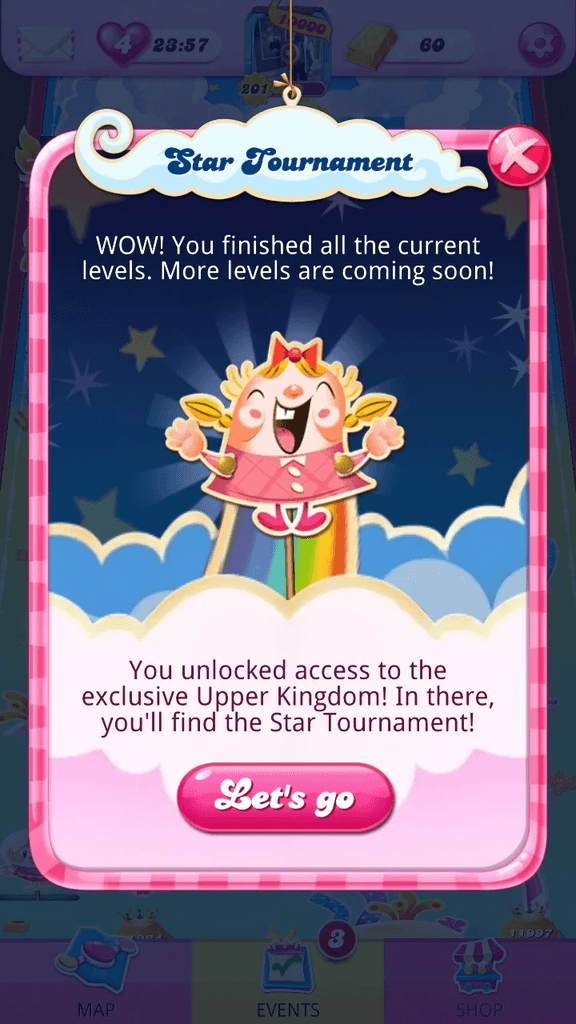
Finishing every level unlocks the Star Tournament.
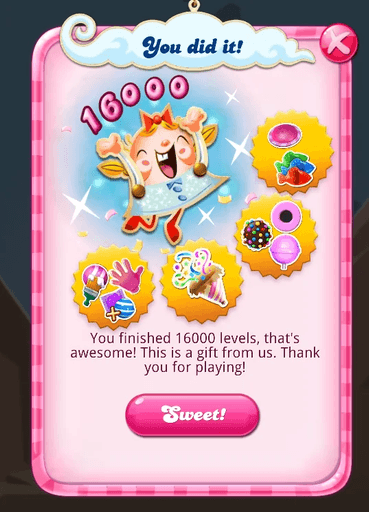
The reward for finishing 16,000 levels is a thank-you message and a gift of boosters.
Recognising weekly activity
Widening the audience
Reaching the final level was only one sign of dedication. Players completing more than 100 levels a week were also investing heavily, well before the end of the map.
The wider late-game audience was about 2.2 million players, compared with 8,000 at the end of the map. Weekly progress gave us a way to recognise dedication within that larger group.
I presented the proposal to product leadership: reward how actively someone plays before they finish the game. The expanded scope included late-game players, those nearing the end and those already there.
Comparing ideas
I compared concepts by reach, impact, confidence and effort (RICE) to weigh player benefit against implementation cost. Weekly badges and updated profile frames scored highest.
| Concept | What it is | RICE score |
|---|---|---|
| Weekly badges | Badges for reaching a number of levels in a week | 700 |
| Updated frames | New profile banners every 1,000 levels | 700 |
| Elite Zone | An exclusive area with VIP rewards | 540 |
| Progress tracking | A screen for comparing progress with other players | 490 |

Milestone unlock

Direct entry
Badge design
Badges for levels passed each week
I worked with the UI designer on four tiers of weekly badges, using AI image generation during exploration. Players could keep earned badges and display them in social features.

Visual design
The four tiers progressed visually from bronze to diamond, making it possible to distinguish achievements at a glance.
Where badges live
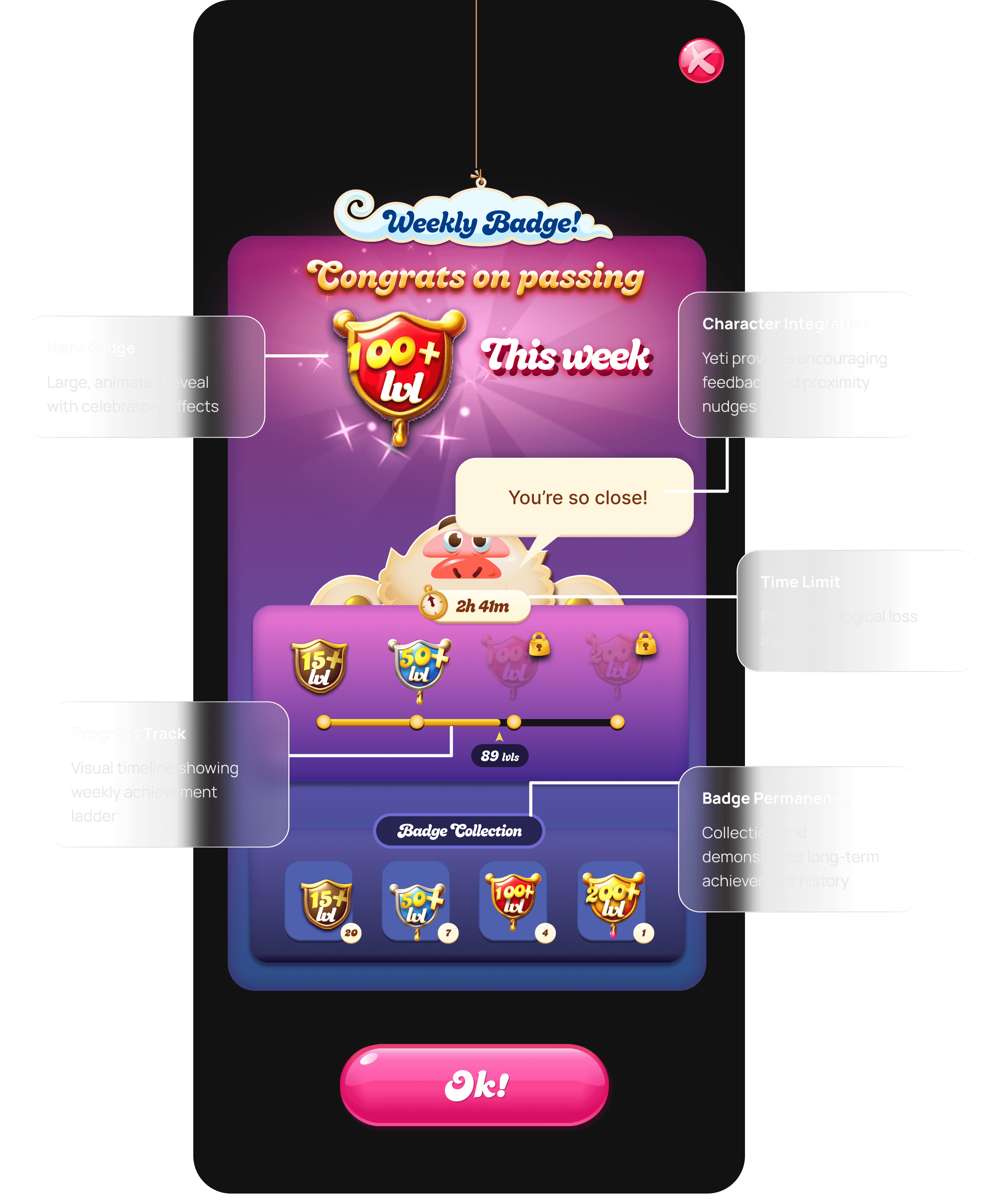
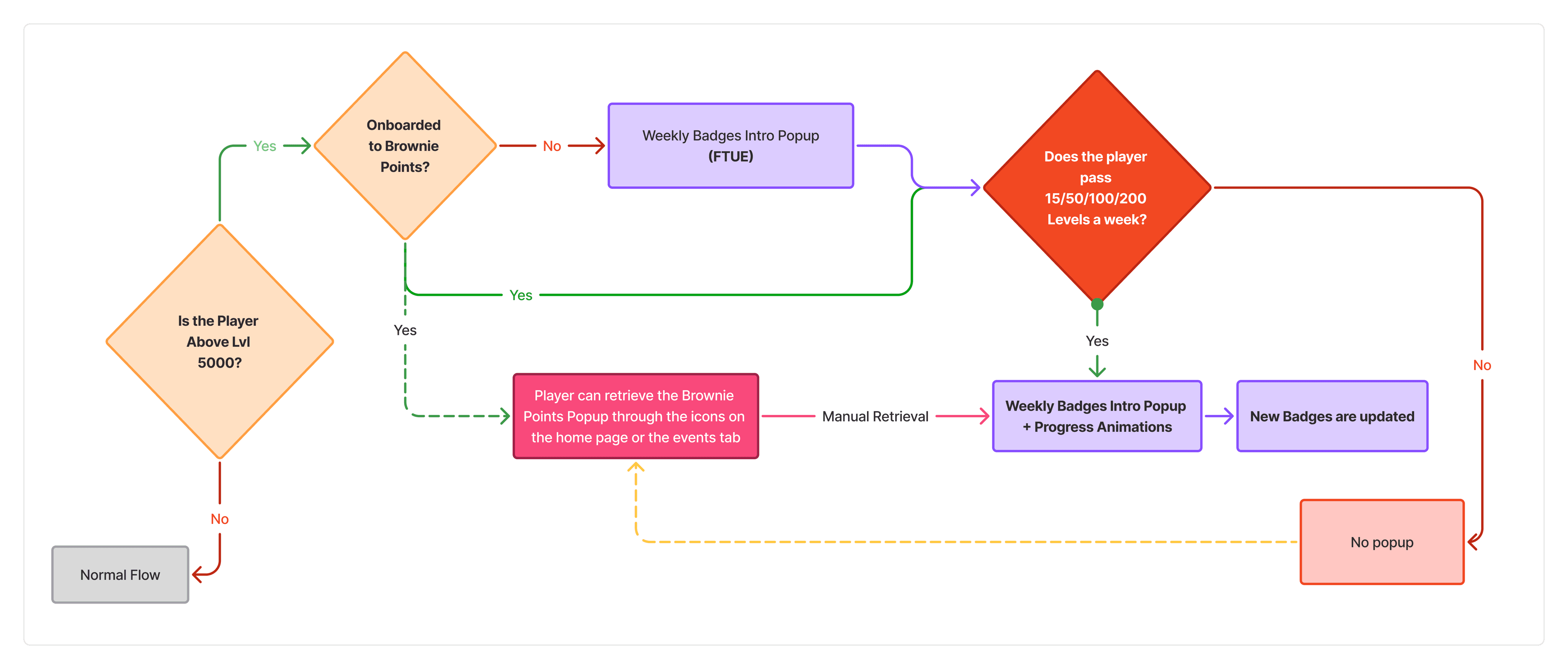
Players received a badge when they crossed a weekly threshold and could revisit it through their profile. The reward remained visible after the celebration ended.
Social profiles
I worked with the Social and Engineering teams to show weekly badges on profile cards, keep them up to date, and carry the same visual treatment across screens.
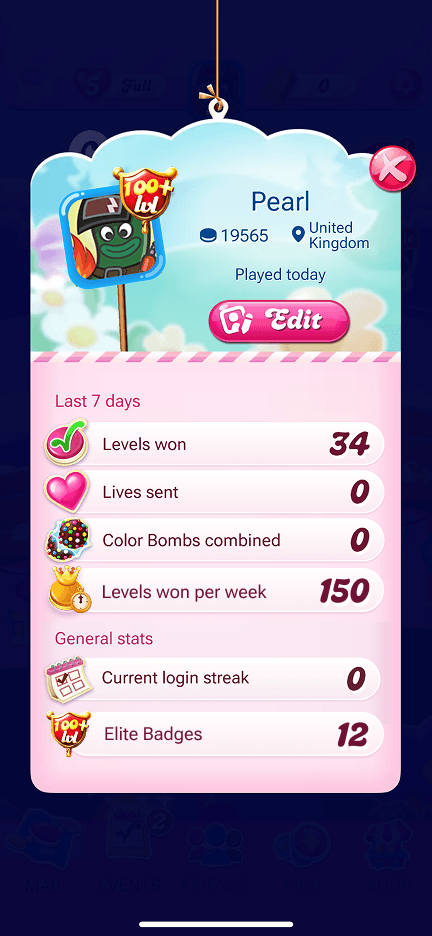
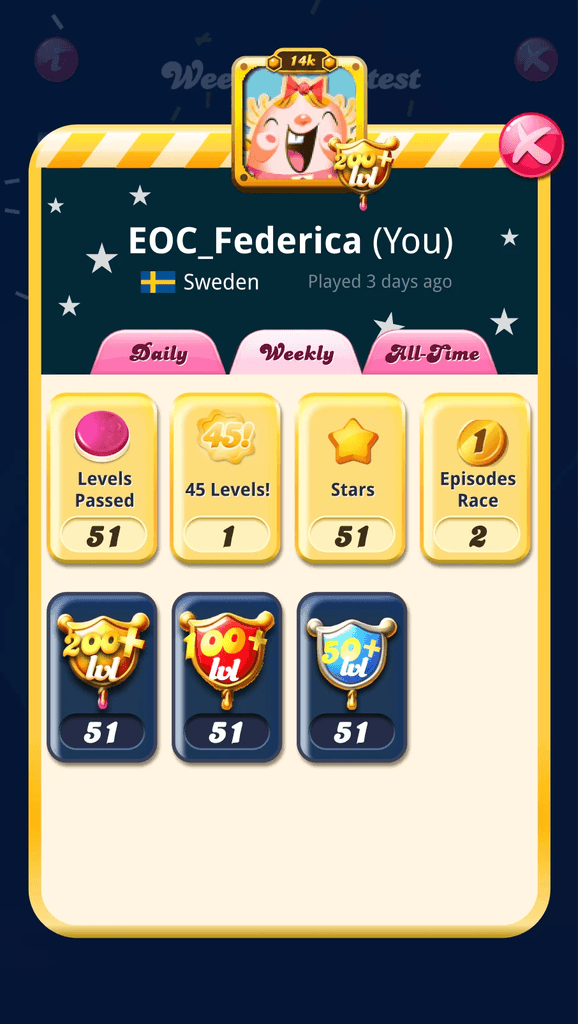
A profile card shows the player's latest badge, their week in numbers and how many elite badges they hold.
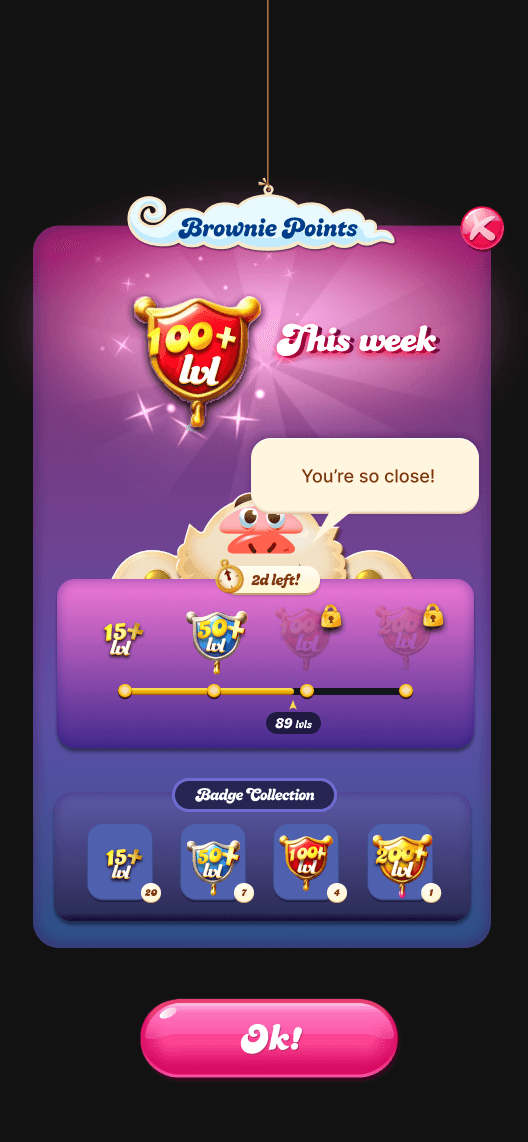
The weekly popup shows the badge earned this week, the next tier and the full collection.
Results
Weekly badges launched in 2024 and improved both engagement and spending.
- game rounds per session
- +2.5%
- retention
- +1%
- gross bookings
- +2%
- levels passed per week
- +5%
The key change was the definition of dedication. Weekly progress let us recognise players before they exhausted the content, with achievements that lasted beyond a celebration screen. Recognition now reached about 2.2 million players, 275 times the group at the end of the map.