In 2022, I designed character selection and unlocking for Hungry Shark Primal, Ubisoft's mobile game about prehistoric sharks. The screen had to help players choose a shark, understand its upgrades and see what they could collect next.

Shark models, currencies, upgrades and offers all competed for space. I focused the experience on what players owned and a visible path to the next unlock.
I used fossils to explain unlocking: each bone a player collects adds a piece to a shark's skeleton. In testing with 80 players, 94% understood the fossil-to-character relationship intuitively.
The challenge
After the first few sessions, collecting another shark needed to feel achievable. Players had to see what they were working towards and how each piece they collected brought them closer.
Player research
Why players collect sharks
Interviews, competitor reviews and early prototype tests helped us distinguish different reasons for collecting. The screen needed to support completing a collection, choosing for performance and discovering new characters.
| Player type | Motivation | What the screen needed to support |
|---|---|---|
| Completionists | Completing the collection | Seeing owned sharks and progress towards missing ones |
| Competitors | Improving performance | Comparing abilities, power and upgrades |
| Explorers | Finding new characters | Browsing the roster and discovering unlocks |
What other games do well
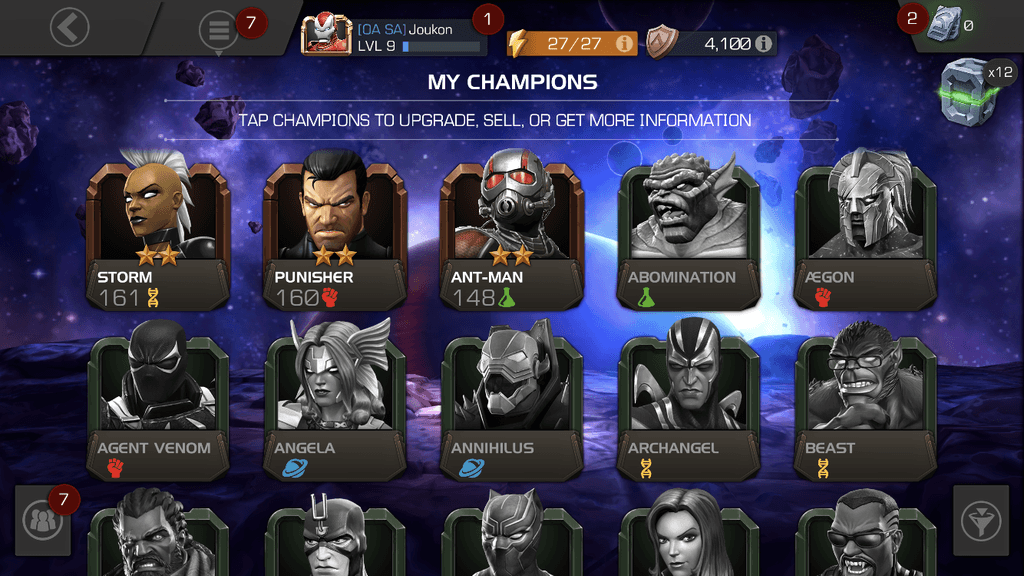
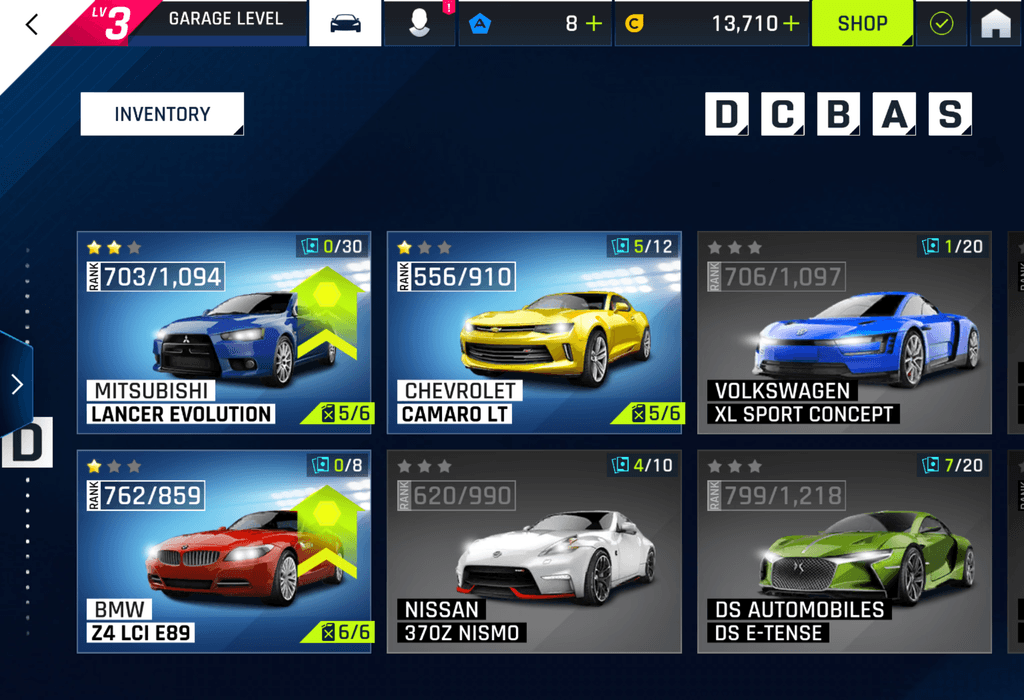
I looked at how three other mobile games show their characters, mark upgrades and place the shop.

Layout exploration
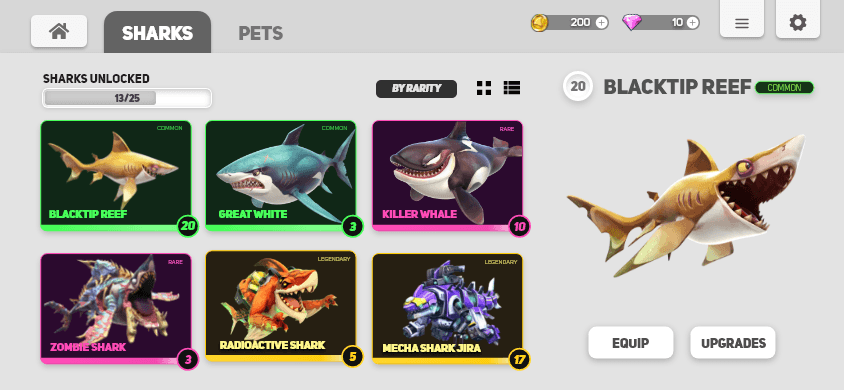
I explored a horizontal collection, a three-shark selection and a vertical grid. The final layout paired the grid with a large preview, keeping the collection visible alongside the selected shark.


The fossil unlock

I used fossil collection to explain how players unlocked a shark. Each bone added a visible piece to its skeleton, showing progress towards the complete character.
Fossil-based progression
Character cards showed the sharks players could unlock and the bones they still needed to collect.

Revealing the skeleton
As players collected bones, the matching parts of the skeleton appeared. Progress showed on the creature itself, alongside the count of bones still needed.

From fossil to shark
Completing the skeleton led to a transformation animation that revealed the playable shark.
- 01LockedThe shark appears as a silhouette.
- 02FossilBone progress fills in, for example 3/3.
- 03TransformationThe fossil glows as it changes.
- 04UnlockedThe full creature appears.

Rarity tiers
Colour and effects distinguished Common, Rare, Legendary and Mythic sharks, making rarity recognisable while browsing.
Playtesting
We tested with 80 participants, including casual mobile arcade players and Hungry Shark veterans.
What players responded well to
- The fossil transformation animation and visual metaphor
- Rarity tiers and the depth of the collection
- Clear visual progress from locked to unlocked
Areas needing improvement
- The link from fossil to unlock was unclear
- Browsing the collection was tedious
- Trophy Road, the track of rewards earned through progress, felt weak
Priorities after testing
- Filtering and sorting to make the collection easier to browse
- Gauges for each shark's abilities and power level
- Milestone celebrations that make rewards more visible
Results
- understood the fossil-to-character relationship intuitively
- 94%
- were interested in the wider progression system
- 89%
- wanted to keep progressing
- 81%
Most of the 80 participants understood the fossil metaphor, but testing still exposed confusion about the unlock step and friction in browsing. The next priorities were filtering, ability gauges and clearer reward feedback.
These results measure understanding and stated interest in a playtest. They do not establish longer-term retention.