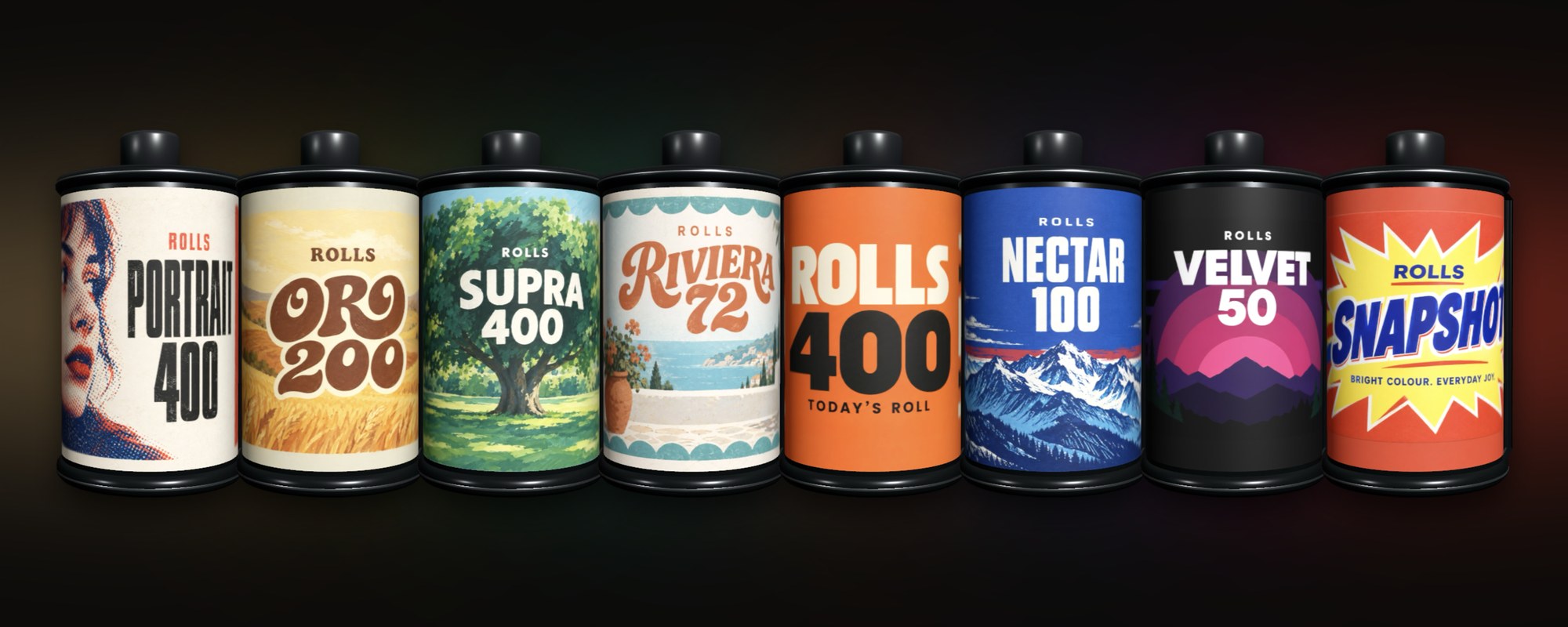
Film apps on a phone are filters: one colour curve, applied to every pixel. Film does not work that way. Grain sits inside the image, highlights roll off, and each colour responds on its own.
Rolls is my attempt at the real thing: film that is generated, not filtered. An image model develops each photo to match a real film, and the people in it stay real. I am building it on my own, as an iPhone camera that sells film by the roll.
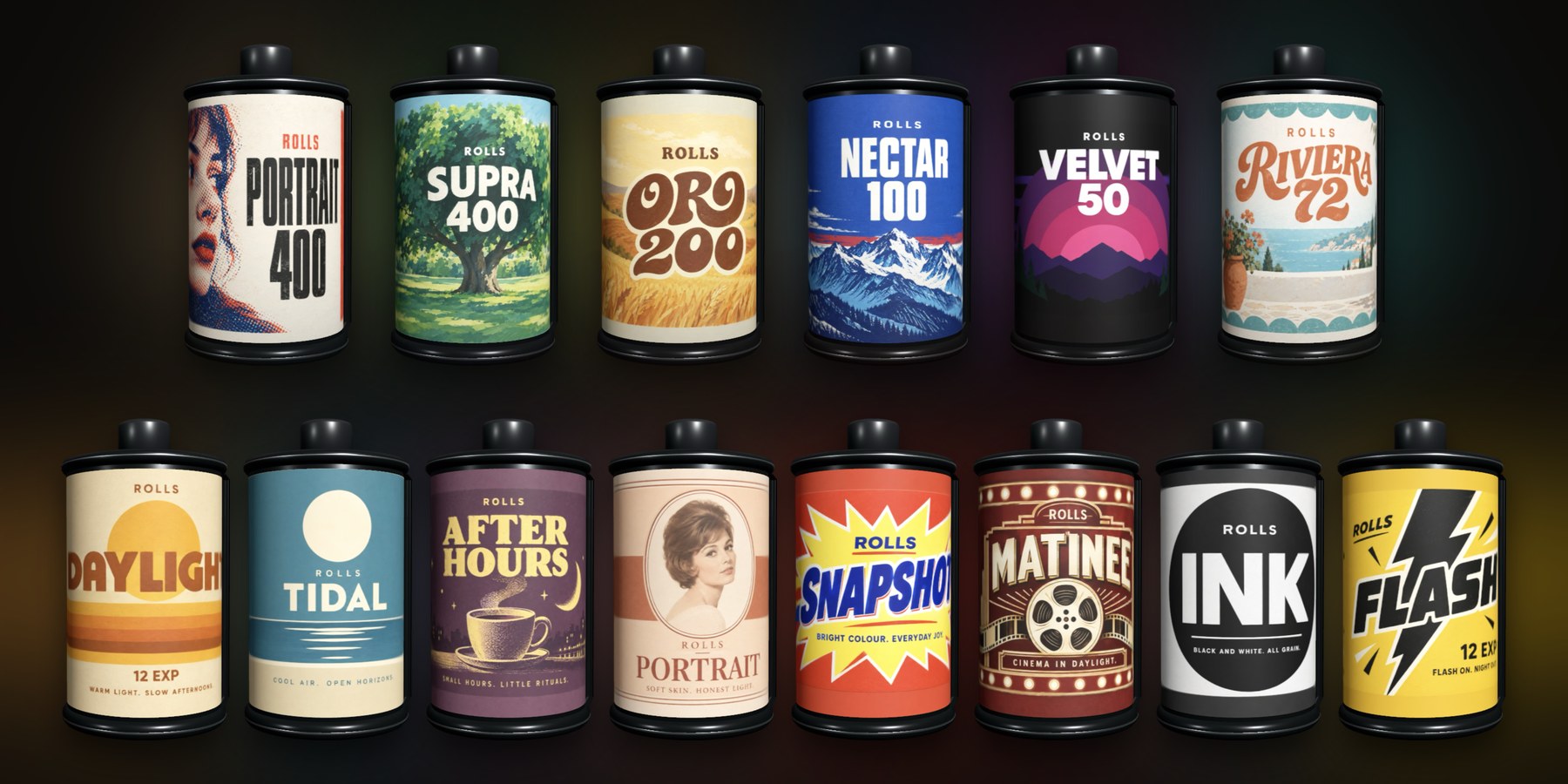
- generated rolls built
- 12
- image models tested, Ideogram 4.6 among them
- 3
- pairs picked on a blind test page
- 126
Not launched. Nothing is on sale, so nothing here is a result from customers.
Developing a photo, not filtering it
A filter
What film apps do
- Changes
- Colour
- Learns from
- A fixed table
A generated roll
What Rolls develops
- Changes
- Colour, grain, softness, highlights
- Learns from
- Real scans of the film
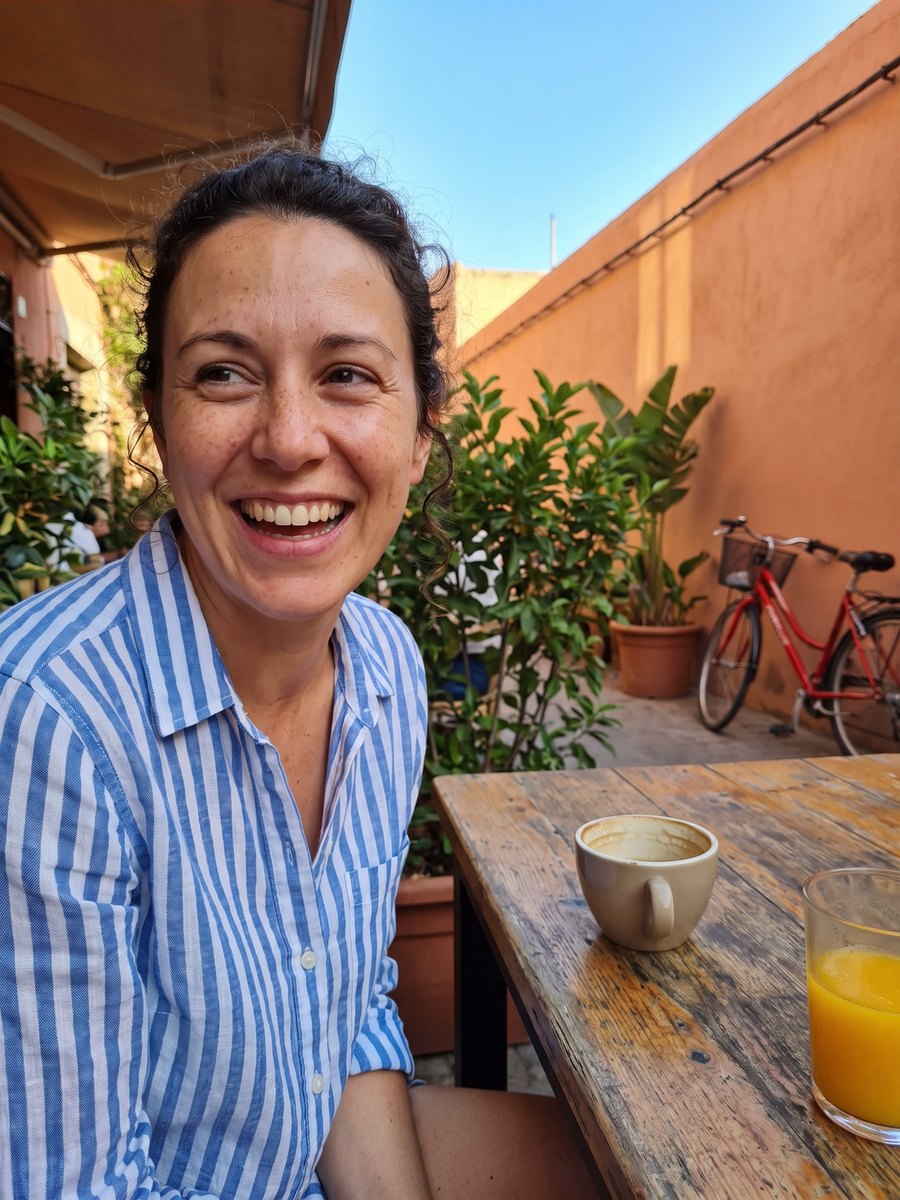
The phone photo.
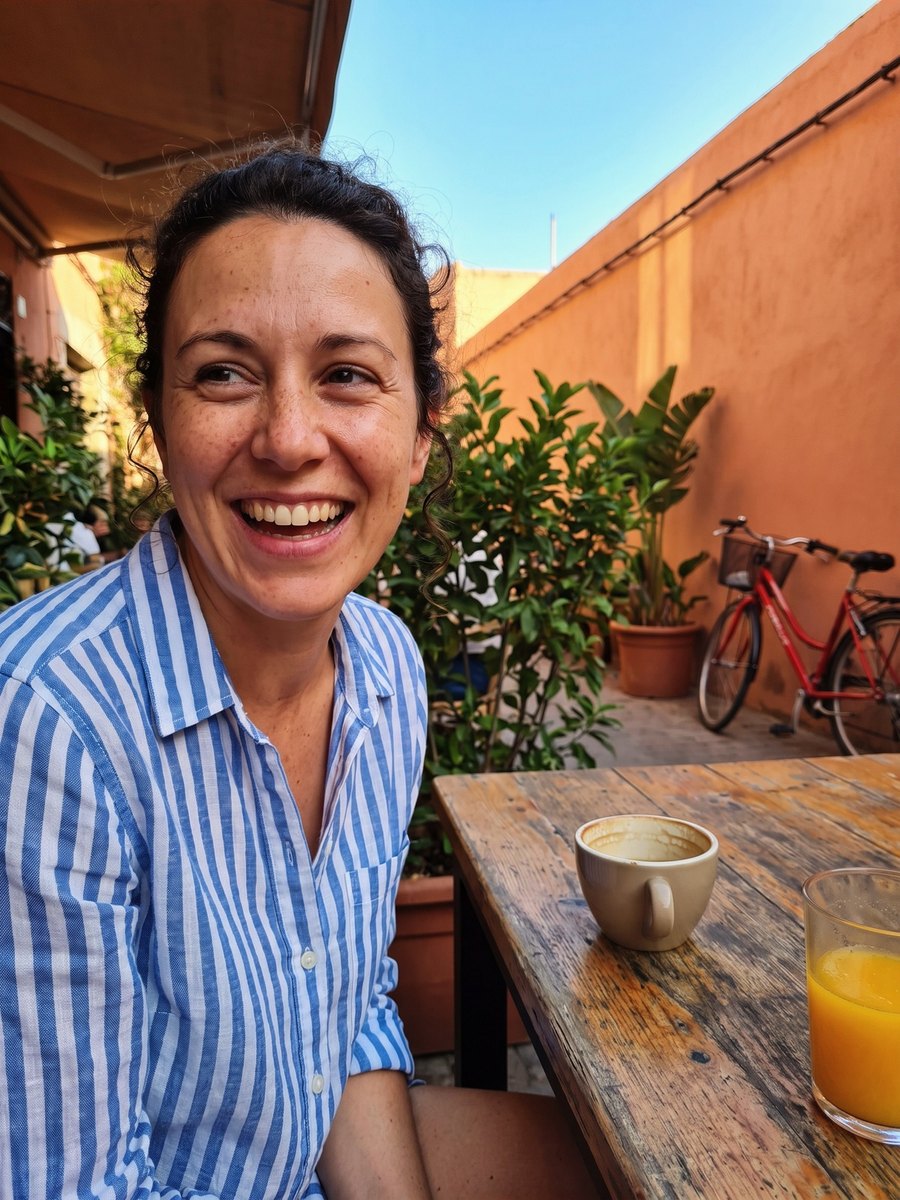
A filter.
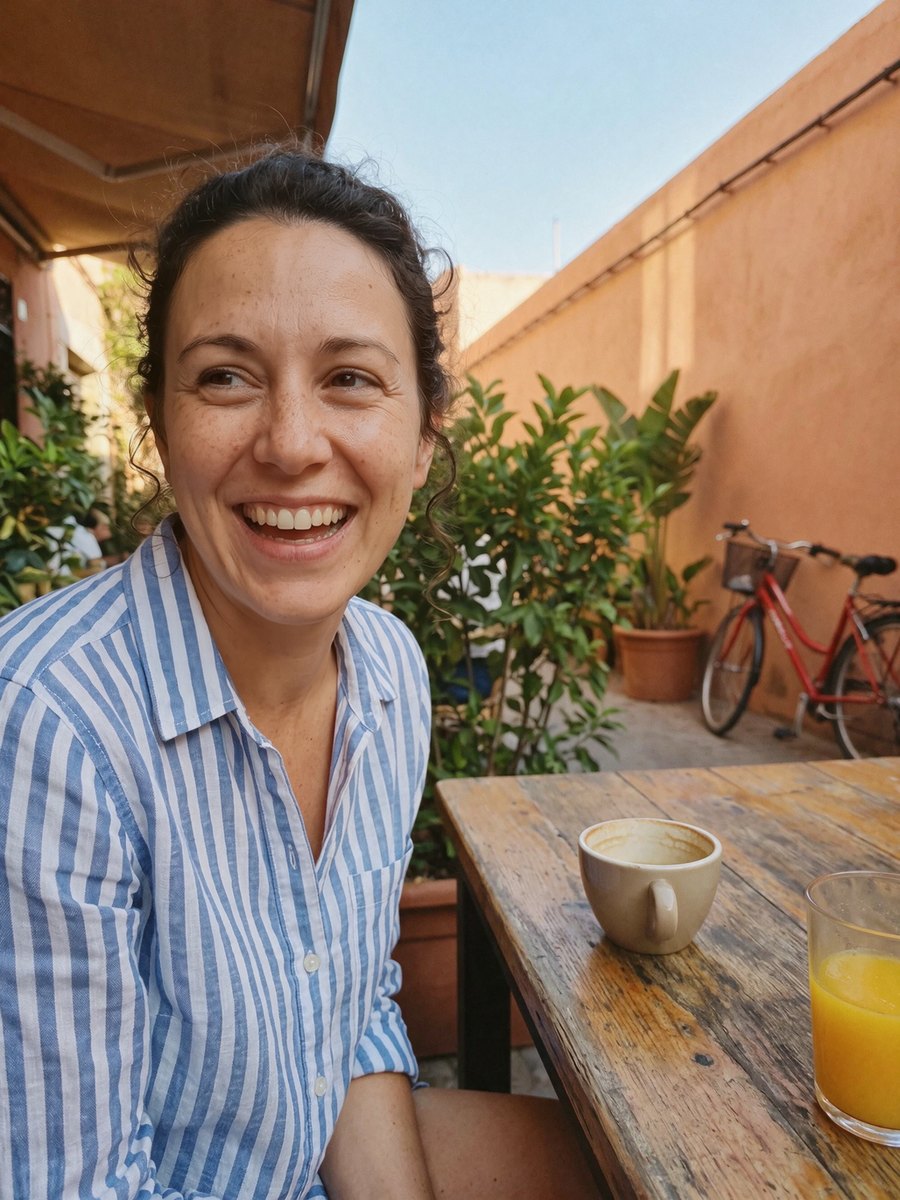
Portrait 400, generated.
Each roll is modelled on a real film, or on one I invented. The model is shown what that film looks like and develops the photo to match, in a single pass.
The faces stay real
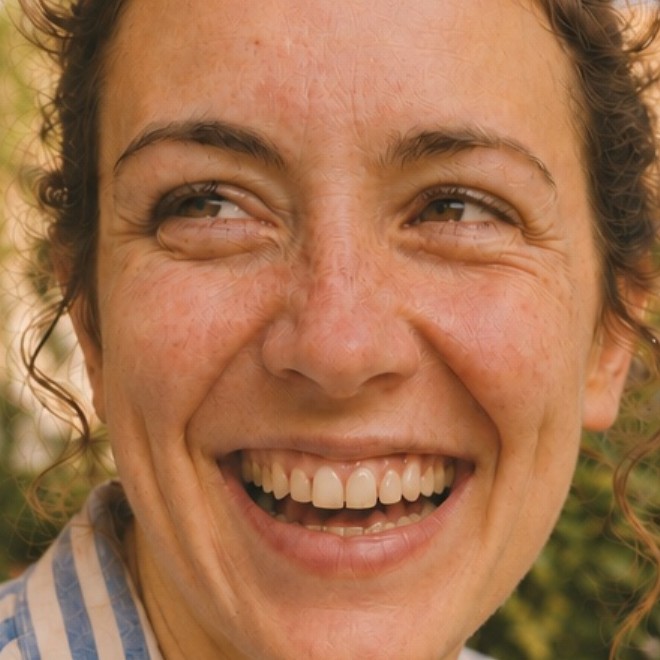
Image models redraw faces. It looks like the person, but the eyes and teeth are slightly someone else's. For a photo of people you know, that is the whole problem. So I built a step that puts each real face back, in the film's colour and grain.
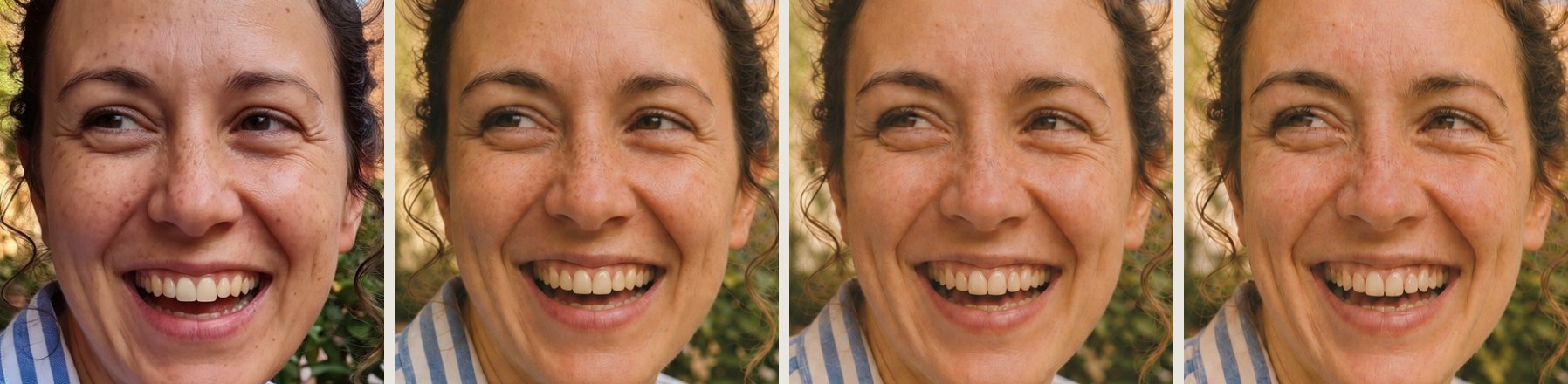
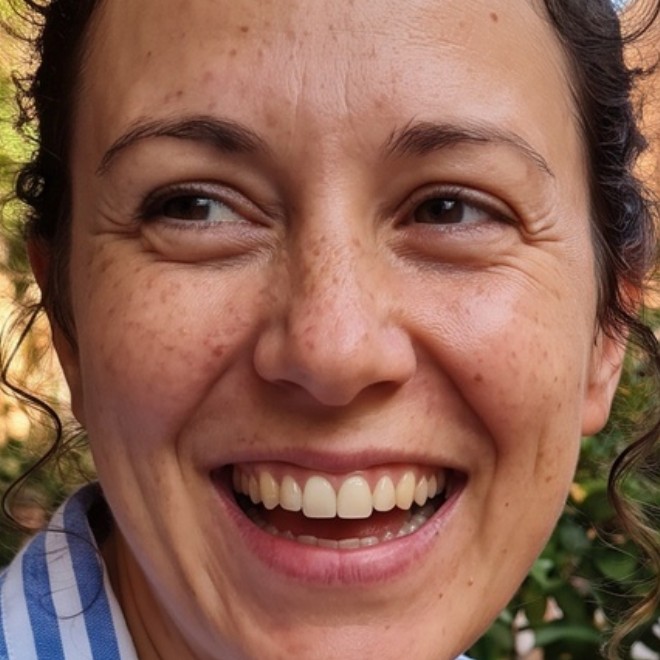
The phone photo.
Without the face lock.
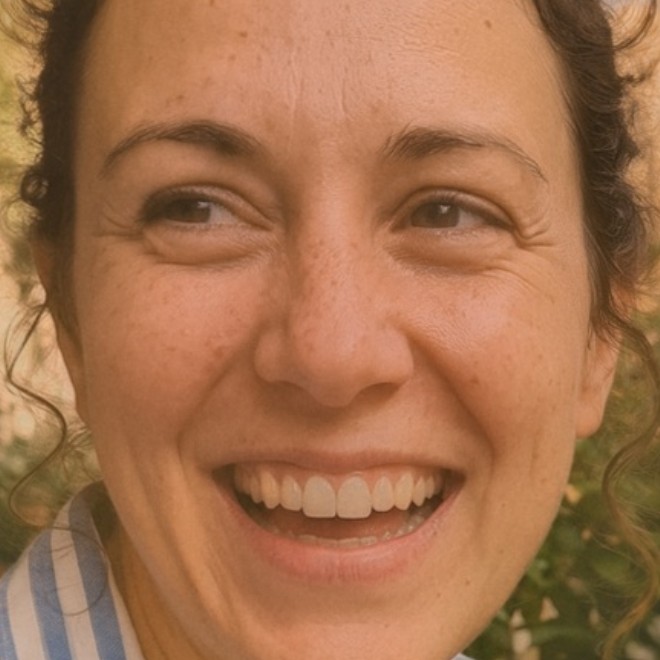
With the face lock.
- face match without the face lock
- 0.620
- the same frame, with the face lock
- 0.865
- a normal develop, with the face lock
- 0.981
Face match to the phone photo; 1.0 is identical. It needs no extra model call.
Every roll is then checked before it is loaded: against real scans of its film, against the other rolls so no two look alike, and face by face. The numbers advise; my eye decides.
Rolls began as a colour engine with no image generation, trained on 1,201 real film scans. It still develops the on-device rolls. I had ruled image models out for people's photos because they invented content; keeping the faces real is what let me reverse that. [TODO: check the engine figure and the date of that reversal against the engine repo.]
A film needs a name, a cover and a price
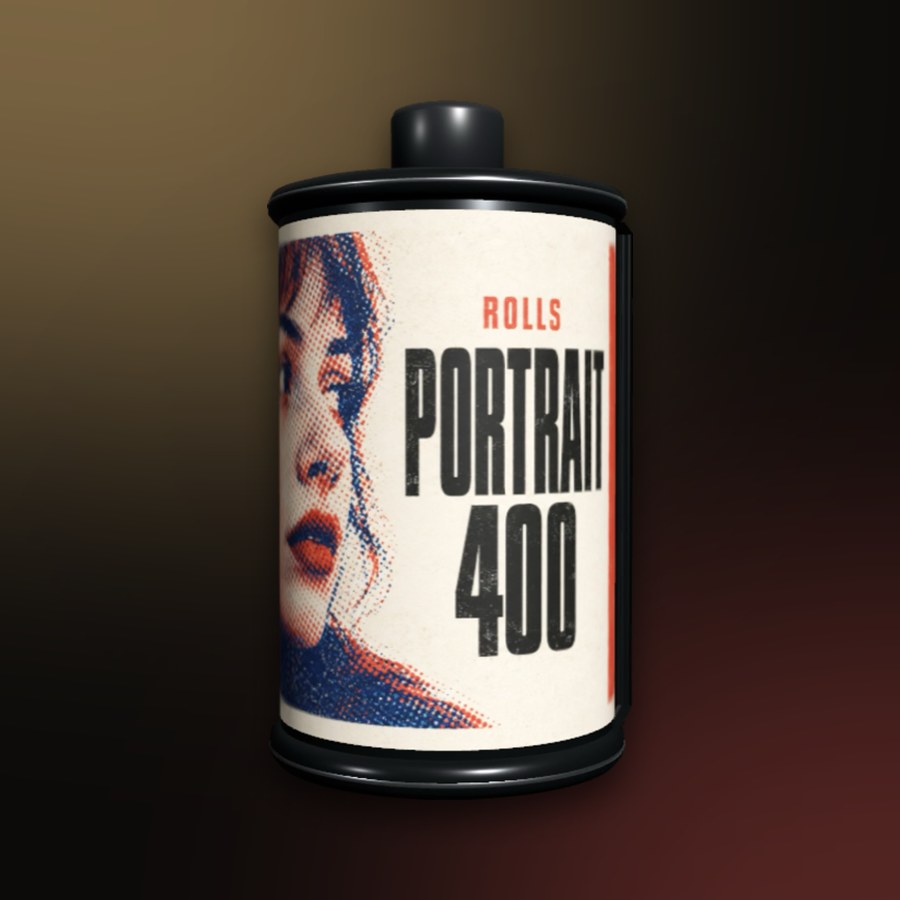
Portrait 400.
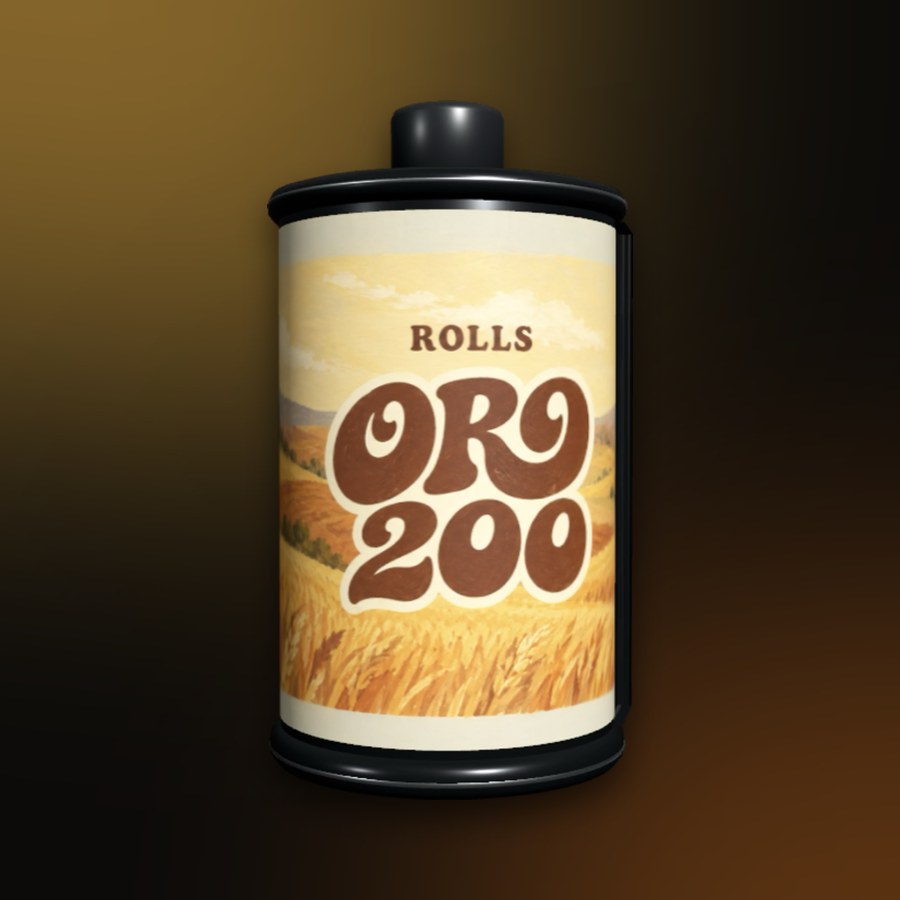
Oro 200.
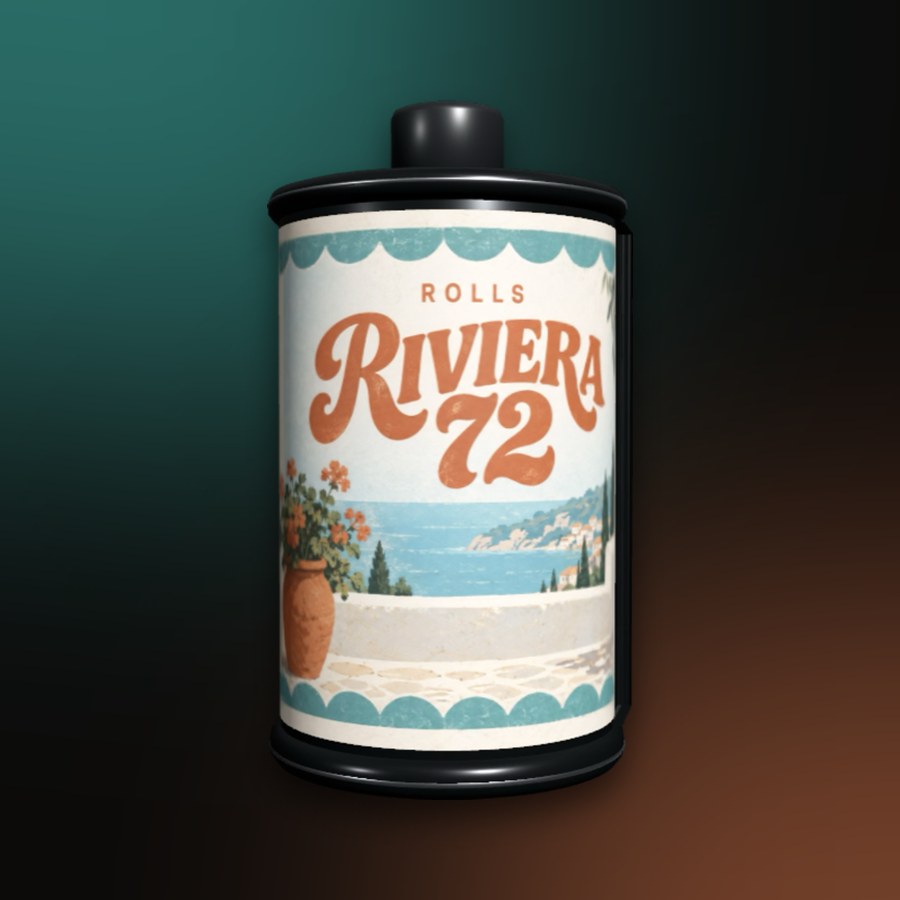
Riviera 72.
Names nod to a film without taking its name. Oro is gold in Spanish and Italian. Pro became Studio. The film speed stays, because that is how people ask for film. The first set came back as jokes, so I asked for tasteful.
A cover is the label on the cartridge. The name spelled exactly, ROLLS small, 12 EXP. No real brands, and no copying a real box. Twelve rolls, one family. Agents wrote the briefs and generated 146 candidates on GPT Image 2.5; I picked every cover, and overrode most of their picks.
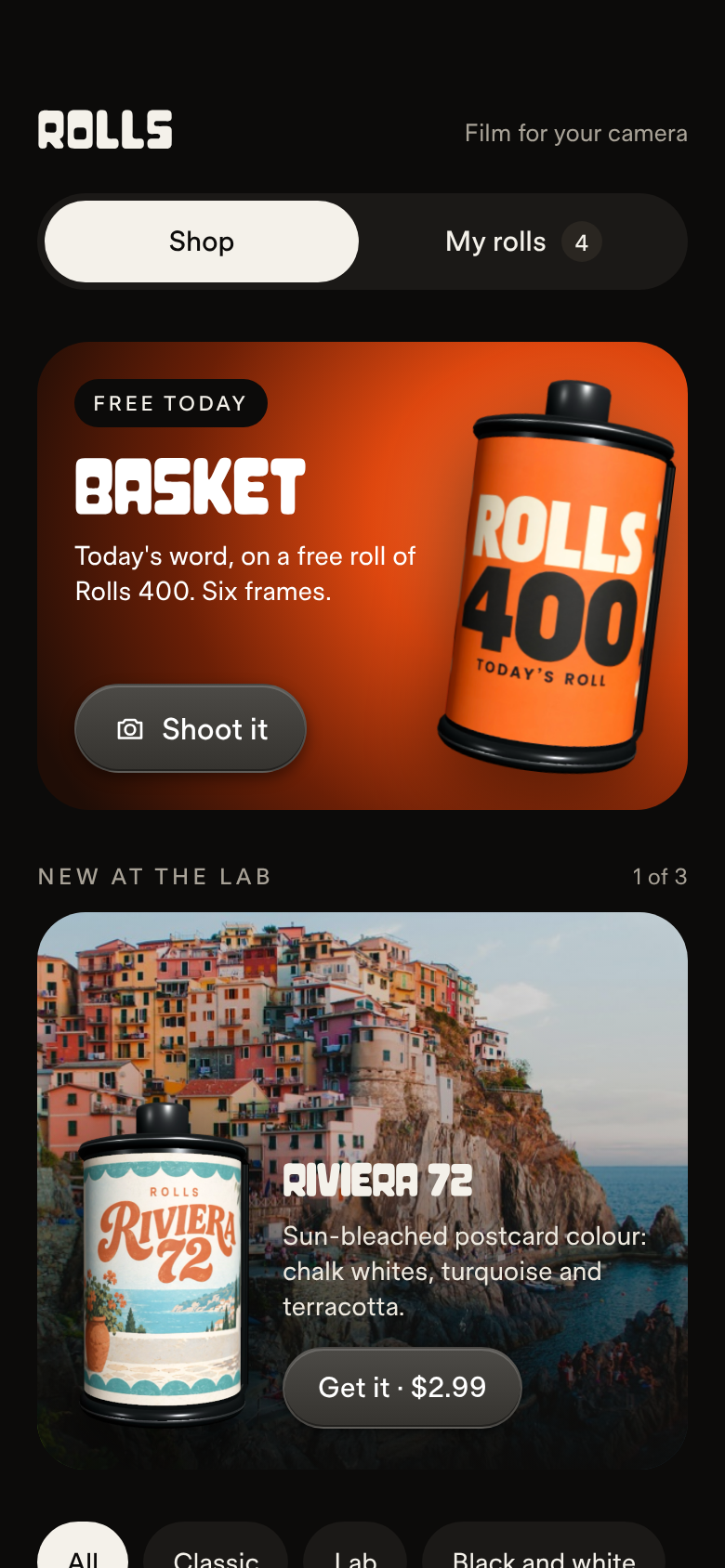
The shop.
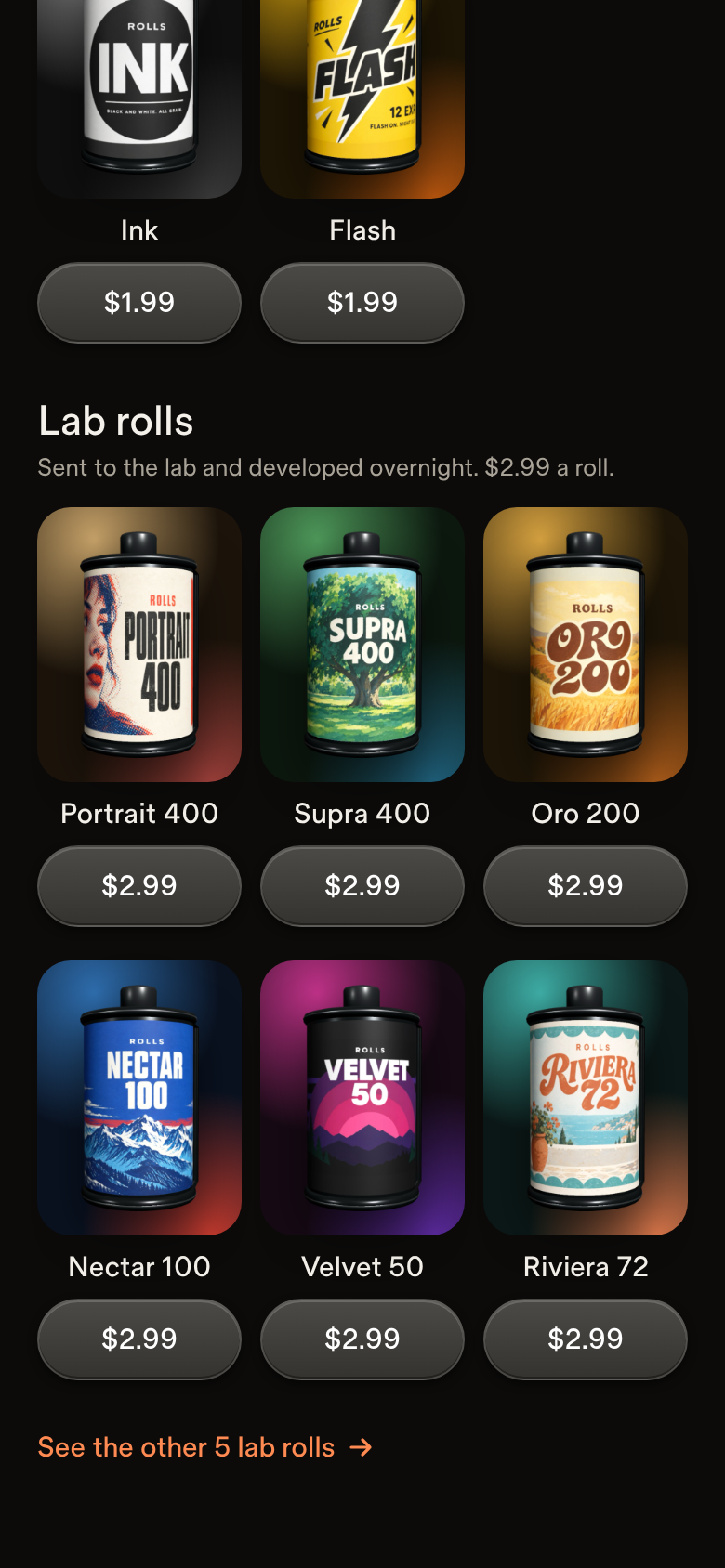
The lab shelf.
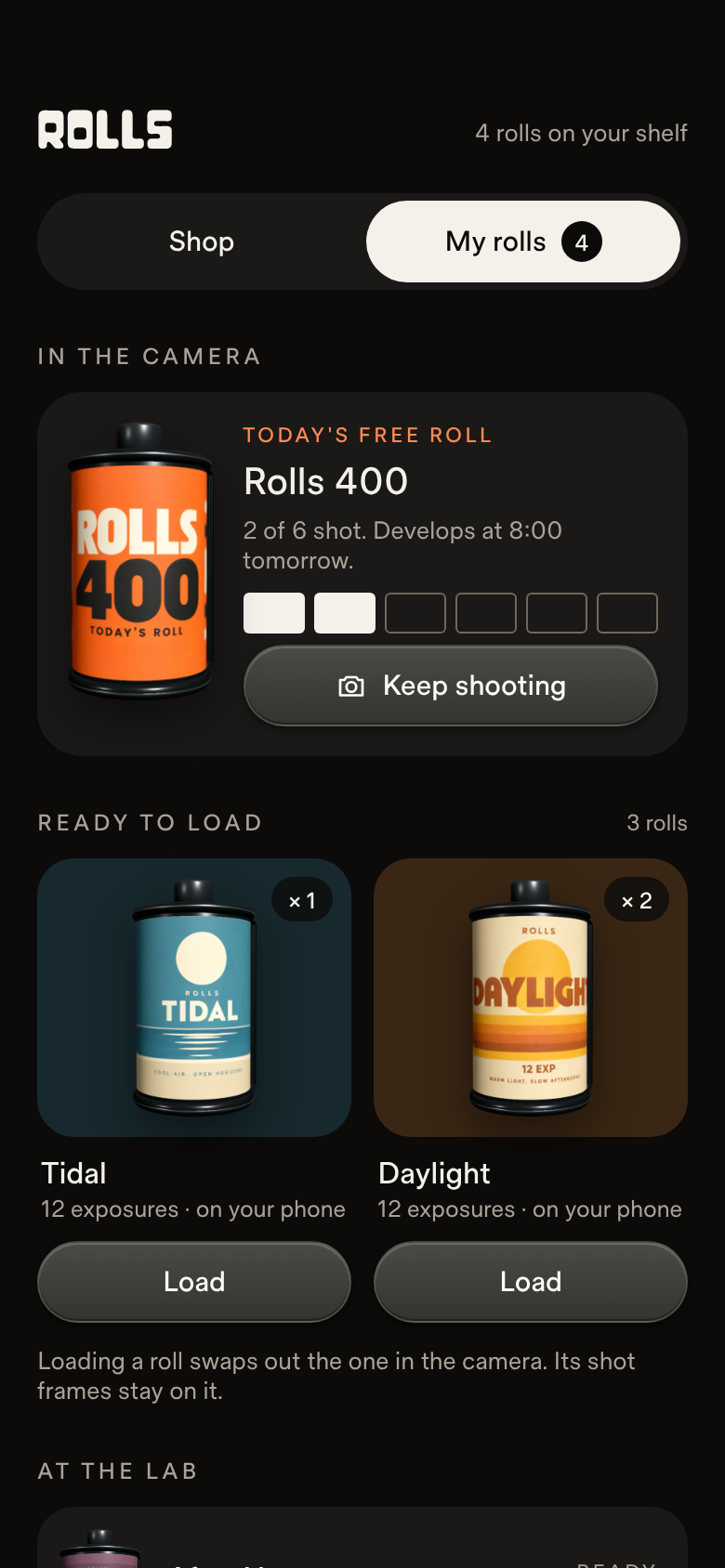
My rolls.
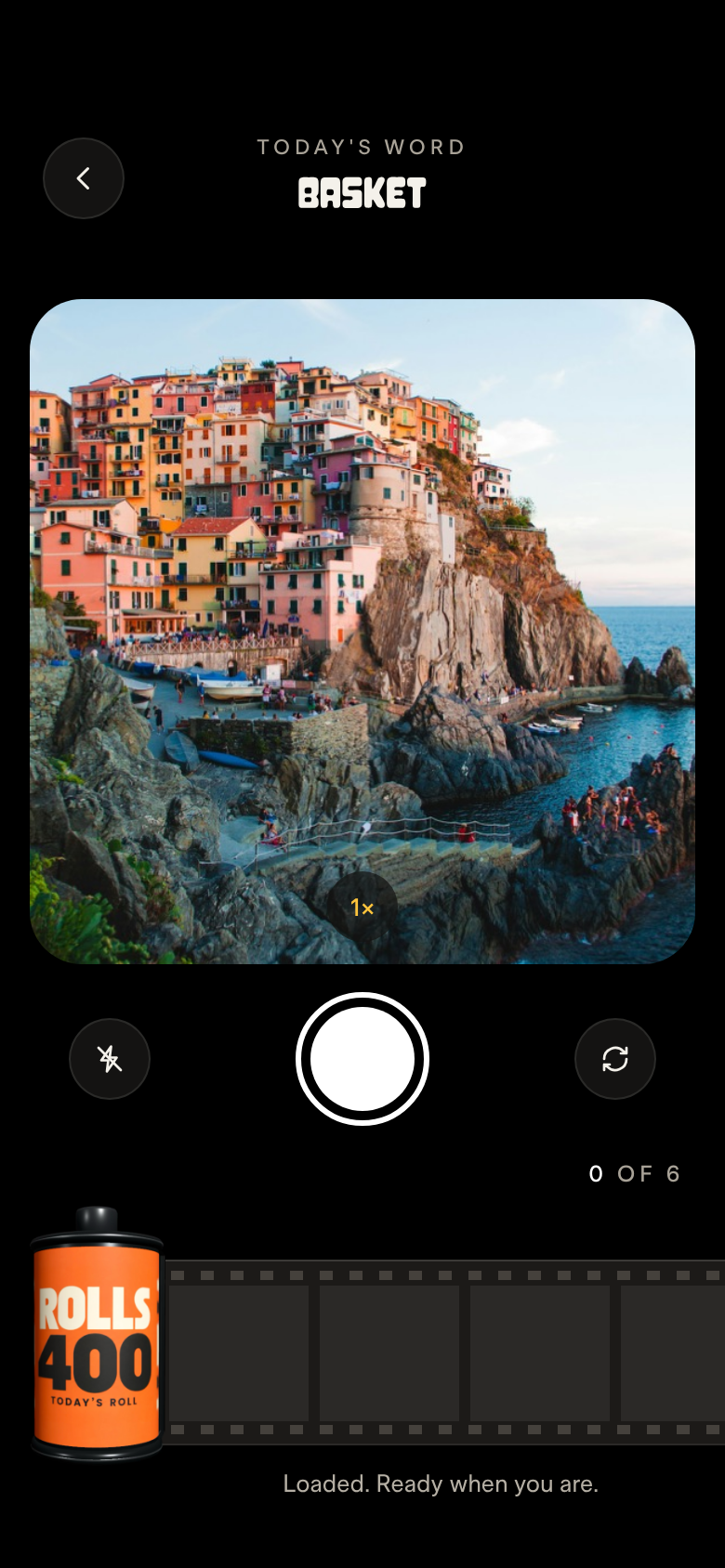
The camera.
The copy sets up the price. On-device rolls are “developed on your phone” at $1.99. Generated rolls are “sent to the lab and developed overnight”, proposed at $2.99. [TODO: most lab rolls still need their one-line description.]
I chose the model blind, one roll at a time
Measures could not tell me which frame I would keep. So an agent built me a test page: the same photo twice, unlabelled, sides shuffled. Tap to flip, pick one.
One pair. The photo flips in place, so only the look changes.
- picks went to Seedream 5.5 over GPT Image 2.6
- 40 of 62
- rolls now develop on Seedream
- 10 of 12
- left and right picks, so the page did not steer me
- 34 / 35
My own picks, on four to ten photos a roll: enough to choose a default, not to call a winner.
The model is set per roll, not for the whole shop. Indoor photos leaned one way and sunny ones the other, and one roll went 7 to 3 against the trend. Where my picks tied, cost decided.
Ideogram 4.6 pushed the look hardest, and it cost it some rolls
On 23 November I ran Ideogram 4.6 on all twelve rolls, with exactly what the other two models got. Nothing was tuned for it.
Where it won. It commits to the film more than either rival. It was the strongest of the three on Studio 400H, Riviera 72 and Trio 400, and it leaves a white sky white where GPT Image paints one in.
Where it lost. The same cast, vignette and dark shadows showed on almost every roll, so twelve rolls looked alike. In a shop that sells the difference between rolls, that matters. Five of the twelve also missed my bar for faces.
- Portrait 40040
- Riviera 7240
- Supra 40031
- Trio 40031
- Maxima 40011
- Oro 20004
Blind, I picked Ideogram four times out of four on a roll I had called too heavy when I could see the labels. On Oro 200 it lost all four. One added line of direction fixed most of the heaviness outdoors; indoor group shots stayed too dark.
What I would tell the Ideogram team
A list of traits is applied in full. The prompt is rewritten into edit instructions, so a hint becomes a set of edits. That is why the look is strong, and why the rolls converge.
Group shots get reframed. For a photo someone took, the framing is not mine to change.
I could not price a roll. The cost came back in units I could not convert.
One person, with agents doing the legwork
About four days of Claude Code sessions. I set the briefs, made the taste calls and approved anything that cost money. An agent skill builds a film from its name and stops for me twice: once to veto its references, once before anything goes live.
The app has two ways to develop, on the device and at the lab, behind one catalogue. A roll says which it uses, so a new film or a new model is a change of data, not an app update.
Not done yet. No roll has run end to end; the lab is switched off. The step that keeps faces real is built and measured, but not in the shipped path. The Ideogram test is half picked. And there is no launch, so no numbers from real people.